
Why Your Biology Matters More Than Your Alarm Clock
You're not lazy or lacking willpower. You're just unclear about your chronotype.

Years ago, I was working with a technical consultant on a software integration. After a couple of planning calls, she made an unusual request.
“Can we schedule all future meetings after 10 a.m.? I’m biologically not a morning person.”
I rolled my eyes while still on the phone. Diva much? I hope this doesn’t cause scheduling conflicts. But I said no problem, I’d figure it out.
I didn’t think of myself as a morning person either, but I never blamed my biology for it. How could I explain that away to my team? “Sorry, we can’t meet before 10 a.m. because of... biology?” Yeah, right.
But we honored her request. We scheduled all future integration calls after 10 a.m., and the implementation carried on.
And you know what I noticed? She was a completely different person.
The earlier calls at 8:30 a.m.? She sounded like she just rolled out of bed all unprepared and foggy. Just going through the motions.
After 10 a.m.? She was sharp, proactive and had answers ready. She was on it.
At the time, I didn’t think much of it, but today, I think back to that scenario and realize she wasn’t being difficult.
She was trying to work with her biology, not against it.
Fast forward a decade, I had my son and sleep became non-negotiable in a completely different way.
I started waking up at 5 a.m. naturally, not because I was forcing it, but because my body was already awake from feeding him at 4 a.m. Once he went back to sleep, staying up felt easier than going back to bed.
My energy was ready to go in the early hours, so I’d work out, journal, drink my coffee in peace, and start my day before anyone else woke up.
Suddenly, I was a morning person. Or so I thought.
What I actually discovered was I wasn’t fighting my biology anymore. I wasn’t trying to force myself to go back to sleep when I was wide awake because it was 5 a.m. I was working with it.
Your Chronotype and Why You’ve Been Ignoring Yours
Your sleep chronotype is your body’s natural sleep-wake preference. It’s genetically determined and influenced by your circadian rhythm. It dictates when you naturally feel alert and productive, or when you are ready to sleep.
Some people are wired to wake up early and peak in the morning and others hit their stride at night. Most people fall somewhere in between.
And here’s the “fun” part → your chronotype changes as you age.
Teenagers are naturally night owls, and their circadian rhythm shifts later, which is why forcing them to wake up at 6 a.m. for school is fighting their biology.
Young adults tend to shift slightly earlier but by middle age, many people become more morning oriented. As you get older, you might find yourself waking up even earlier without trying.
Your chronotype isn’t static. It evolves with your life stage, hormones, and lifestyle.
But here’s what doesn’t change.
Forcing yourself into a schedule that doesn’t align with your natural rhythm will sabotage your health, productivity, and mindset.
The Four Chronotypes: Which One Are You?
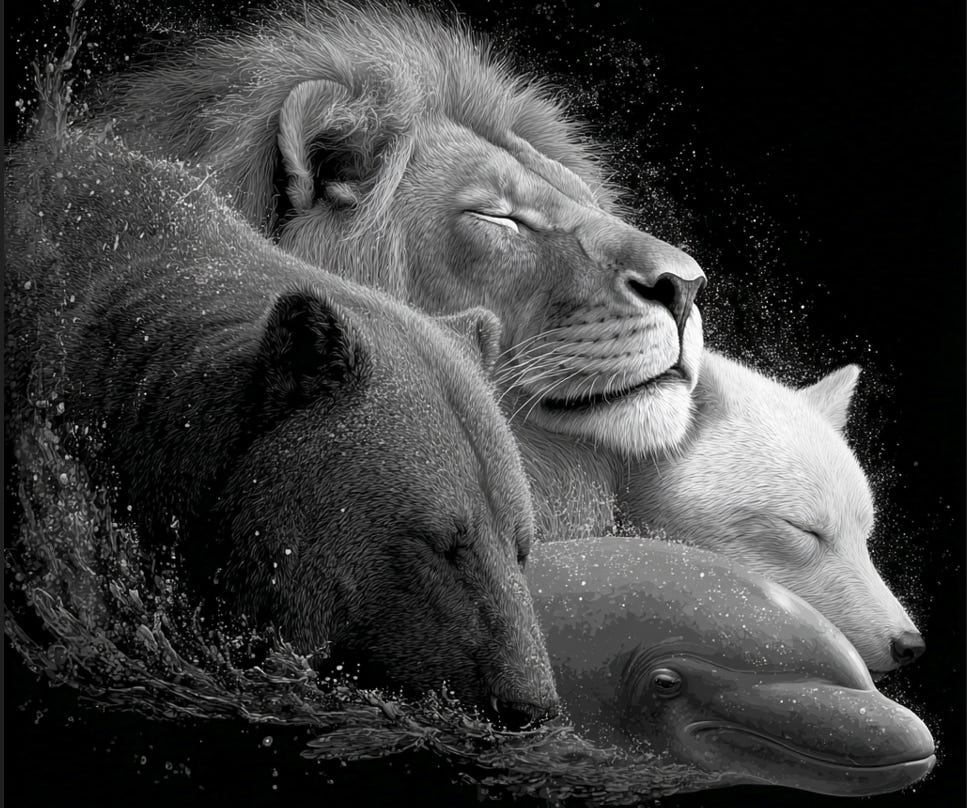
Sleep researcher Dr. Michael Breus identified four main chronotypes as Lion, Bear, Wolf, and Dolphin, each with different energy patterns, peak performance windows, and sleep needs.
The Lion is the early riser, like me. Lions wake up naturally before the sun, feel most productive in the morning, and start winding down by early evening. If you’re a Lion, you probably don’t need an alarm. You wake up ready to go, crush your most important work before 10 a.m., and feel tired by 9 p.m., if not sooner.
The Bear follows the sun and make up the majority of the population. They wake up with the sunrise, feel energized during daylight hours, and wind down when it gets dark. If you’re a Bear, you do best with a consistent sleep schedule that aligns with natural light patterns. You’re productive mid-morning through mid-afternoon, and you sleep well when you stick to a routine.
The Wolf is the night owl. Wolves struggle with early mornings and come alive in the evening. If you’re a Wolf, you probably hit snooze multiple times, feel groggy until late morning, and do your best work after everyone else has left the office or better yet, gone to bed. Your creative energy peaks at night and going to bed before midnight feels impossible. Sounds exactly like my husband!
The Dolphin is the light sleeper with irregular patterns. Dolphins struggle with insomnia, wake up frequently during the night, and often feel tired no matter how much they sleep. If you’re a Dolphin, your energy is inconsistent and easily disrupted by noise or light, and you feel most alert in short bursts throughout the day.
Your chronotype isn’t about discipline or laziness. It’s just biology.
Understanding Your Strengths and Challenges
Each chronotype brings different advantages to the table and understanding yours helps you leverage your natural strengths instead of fighting them.
Lions have the advantage of alignment.
Traditional work schedules, school schedules, and societal norms favor early risers. Lions wake up naturally when most of the world is sleeping and they tend to be proactive with getting important work done before distractions hit. Lions often report better mood and health markers because their rhythm matches cultural expectations.
The challenge? Evening social events can feel draining and having a late night can throw them off for days. A rigid schedule can also feel limiting when life demands flexibility.
Bears have the advantage of adaptability.
Most people are Bears, which means the world is built around their rhythm. They align with natural light patterns and have steady energy throughout the day making it generally easy to sleep when a routine is maintained. Bears are the most socially compatible chronotype because they can handle morning meetings and evening events without suffering too much.
The challenge? They can feel average at everything without standout peak performance windows. And when their routine gets disrupted from travel, stress, or irregular schedules, it throws them off more than other chronotypes.
Wolves have the advantage of peak performance.
While the rest of the world is exhausted by 6 p.m., Wolves are just hitting their stride. Their energy peaks in the evening, which can be a superpower if you can structure your life around it. Creative work and deep focus often comes easier for Wolves during hours when distractions are minimal.
The challenge? Society isn’t built for their rhythm. Early morning meetings and school drop-offs with a traditional 9-to-5 schedule create constant conflict with their biology. Wolves often operate chronically sleep-deprived, which negates many of their natural advantages.
Dolphins have the advantage of heightened awareness.
They’re detail-oriented and often perfectionists in their work, which can drive high-quality output when they’re firing on all cylinders. Dolphins also are sensitive to their environment and can be easily disrupted by everything going on around them
The challenge? Their sleep is fragile. Dolphins suffer from chronic sleep issues and unpredictable energy making it hard to maintain consistency. They need more support than other chronotypes to create stable routines.
Understanding your chronotype isn’t excusing your behavior. It’s about recognizing your natural strengths and working with them instead of constantly swimming upstream.
Fighting Your Biology Sabotages Your Health & Wellness
When you force yourself to operate outside your natural rhythm, your body pays the price. And it’s not just about feeling tired…it goes deeper than that.
Every time you override your body’s natural sleep-wake cycle, you’re creating a cascade of hormonal and metabolic disruptions that compound. You might power through it for weeks or months, but your body is keeping score, and it will eventually demand payment.
Sleep quality suffers. If you’re a Wolf trying to go to bed at 9 p.m., you’ll lie awake for hours on end just thinking why you can’t go to sleep. If you’re a Lion forcing yourself to stay up late, you’ll wake up exhausted. Either way, you’re not getting the deep, restorative sleep your body needs.
Hormones get disrupted. Your circadian rhythm controls more than just sleep. It regulates cortisol, melatonin, insulin, and growth hormone. And when you ignore your chronotype, these hormones fall out of sync and cause havoc. Cortisol spikes at the wrong times and melatonin doesn’t kick in when it should. Your blood sugar regulation often suffers, and your rest and recovery go down the drain.
Your metabolism slows down. Poor sleep and hormonal disruption lead to weight gain, increased cravings, and difficulty losing fat. Even if you’re eating well and strength training, not getting enough sleep just ruins all the work you’ve put in.
Your immune system weakens. Chronic sleep deprivation from fighting your chronotype increases inflammation and makes you more susceptible to illness. A weak immune system also slows recovery from workouts and stress related events.
It’s more than being just tired and low energy. You’re literally breaking your body down by not honoring your biological rhythm.
If you find this useful, I write here each week about strength, energy, and building systems that actually work. You can subscribe below and read along.
Fighting Your Biology Kills Your Productivity & Wealth
Most productivity advice assumes everyone works best in the morning. You’ve heard it. Wake up early and do your deep work first thing before the world starts demanding from you. And while you’re at it, tackle your hardest tasks before noon.
But if you’re a Wolf, that advice is useless. Your brain hasn’t logged on yet and forcing yourself to do cognitively demanding work when your body is still waking up just isn’t going to happen smoothly. You’re essentially wasting your peak performance window at night on low value tasks or sleep.
Here’s what happens when you work against your chronotype:
You spend your best hours on autopilot tasks and your worst hours trying to focus on important work. Meetings scheduled during your low-energy windows drain you and deep work attempted outside your peak performance window takes twice as long and produces half the quality.
You burn through willpower fighting fatigue instead of channeling it into meaningful work. And you end every day feeling like you didn’t accomplish anything, even though you were “busy” all day.
But when you align your work with your chronotype?
You schedule deep work during your peak hours and handle low-stakes tasks during your energy dips. And when you protect your best mental state for your most important work, suddenly, you’re getting more done in less time with less effort.
Your chronotype isn’t just about sleep because sleep effects everything. It’s about optimizing your productivity and, by extension, your earning potential.
Fighting Your Biology Destroys Your Mindset
This hits hard and I’m sure we’ve all experienced a version of it.
When you’re constantly forcing yourself to operate outside your natural rhythm, you start to internalize failure.
You wake up exhausted and tell yourself you’re lazy.
You struggle to focus in the morning and assume you lack discipline.
You watch early birds thrive and wonder what’s wrong with you.
And that’s the mental toll.
Nothing is wrong with you, you’re just fighting your biology.
You feel like you’re always behind because you compare yourself to people operating on a completely different schedule. You beat yourself up for not being a morning person or for not being able to fall asleep at a “normal” time.
You stop trusting yourself. You override your body’s signals ignoring them when you’re tired and you push through anyways when you know you should rest.
You disconnect from what your body is telling you because you’ve been conditioned to believe there’s only one “right” way to live, like waking up early.
But when you honor your chronotype?
You stop fighting yourself and build routines that work for your body. You schedule your life around your natural energy patterns instead of forcing your energy to fit everyone else’s schedule.
And suddenly, you’re not failing anymore. You’re thriving!
Optimize Your Health, Wealth, and Mindset
Once you know your chronotype, you can start structuring your day to work with it instead of against it. I know you may be thinking that your schedule is not as flexible as I may believe but even little things help, so let me show you how.
If You’re an Early Rising Lion🦁
Your superpower is the morning so embrace it. You wake up with energy and clarity that most people don’t have until after their second cup of coffee. Use it strategically.
Health: Work out first thing in the morning when your energy is highest. Eat a protein-forward breakfast to fuel your early start and wind down early when your body is ready for sleep by 9 or 10 p.m. Protect your evening routine and get to bed on time consistently.
Wealth: Schedule your most important, cognitively demanding work between 6 a.m. and 10 a.m. This is when you’re the sharpest. Take meetings or appointments mid-morning when you’re still strong but not at peak focus. Avoid scheduling anything critical after 3 p.m. when you’re already checking out for the day.
Mindset: Don’t apologize for going to bed early. You’re not boring, you’re optimizing! Protect your mornings fiercely because that’s your competitive advantage.
If You’re a Bear Following the Sun 🐻
You’re wired to align with natural light, which means consistency is your best friend.
Health: Work out mid-morning or early afternoon when your energy is naturally elevated. Eat regular protein rich meals at consistent times to keep your energy stable. Expose yourself to bright light in the morning and dim the lights in the evening to reinforce your natural rhythm.
Wealth: Your productivity peaks from 10 a.m. to 2 p.m., so schedule deep work during this window and handle admin tasks and meetings in the early morning or late afternoon. You’re steady and reliable, so use that to your advantage by building consistent routines.
Mindset: You thrive on structure, so build it and stick to consistent sleep and wake times. Don’t let your schedule get chaotic as it throws off your rhythm more than other chronotypes.
If You’re Night Owl Wolf 🐺
Remember that you’re not lazy, you’re just operating on a delayed schedule. Stop trying to force yourself into a Lion’s routine if you absolutely don’t have to.
Health: Work out in the late afternoon or evening when your energy is highest. Eat a lighter breakfast, or skip it until you’re hungry, and save your larger meals for later in the day when your metabolism is more active. Wind down gradually if your body doesn’t want to sleep until midnight or later, to give yourself time to transition into a rest and sleep mode.
Wealth: Protect your late-morning and evening hours for deep work. This is when your brain is firing on all cylinders. Don’t schedule important meetings or appointments before 10 a.m. if you can avoid it. If you have control over your schedule, shift your working hours later. A 10 a.m. to 6 p.m. schedule will serve you better than 8 a.m. to 4 p.m.
Mindset: Stop feeling guilty about not being a morning person because you’re wired differently. If you can, build a life that honors your natural rhythm, but if you can’t, give yourself grace in the mornings and make up for it during your peak hours.
If You’re a Light Sleeper, Irregular Dolphin 🐬
Your sleep is fragile, and your energy is unpredictable. That means you need more structure, not less.
Health: Prioritize sleep hygiene obsessively and consider taking naps. Keep your room cool, dark, and quiet and avoid caffeine in the afternoon. Work out earlier in the day since evening exercise can make it harder for you to fall asleep. And manage stress proactively since your nervous system is more reactive than other chronotypes.
Wealth: Work in focused sprints when your energy is steady, then rest when it dips. Don’t try to push through fatigue because it backfires. Track your patterns to identify when you’re most alert and protect those windows for important work. You might need more flexibility in your schedule than other chronotypes.
Mindset: Release the idea that you “should” sleep like everyone else. Your sleep is different, and that’s okay. Focus on what you can control and let go of what you can’t.
The Light Exposure Factor for All Chronotypes
Light is the most powerful external signal for regulating your circadian rhythm. It doesn’t matter what your chronotype is, it’s how you manage light exposure that can either support your natural rhythm or work against it.
Your body uses light to determine when it’s time to be awake and when it’s time to wind down for sleep. Morning light advances your internal clock, making you wake earlier. Evening light delays it, making you stay up later.
And the type of light matters. Blue light from screens suppresses melatonin production, which is why scrolling before bed makes it harder to fall asleep.
Morning light is non-negotiable for all chronotypes.
Getting bright light exposure within 30 to 60 minutes of waking signals to your brain that it’s daytime. This helps regulate cortisol, boosts alertness, and sets your circadian rhythm for the day. Ideally, you want 10 to 30 minutes of natural sunlight.
Wolves need this the most. If you’re a night owl struggling with early mornings, morning light is your best friend for gradually shifting your rhythm earlier. It won’t turn you into a Lion overnight, but consistent morning light exposure can help you wake up feeling less groggy and more alert.
Lions need to protect their evenings. If you’re naturally an early riser, evening light exposure can push your bedtime later than your body wants. Dim the lights in your home 1 to 2 hours before bed or at sunset. Another trick is to use warm-toned bulbs or a Hue bulb to control your light shades, instead of bright white bulbs.
Bears do well when they follow natural light patterns. You’re wired to align with the sun, so exposure to bright light during the day and darkness at night reinforces your rhythm. Get outside during daylight hours when possible and dim the lights as evening approaches. Your body already wants to sync with natural light, so don’t fight it with artificial light at the wrong times.
Dolphins need strict light hygiene. Your sleep is already fragile, and light exposure can make it or break it. Bright light in the morning helps anchor your rhythm setting your circadian rhythm for the day. And complete darkness at night is critical because even small amounts of light can disrupt your already-sensitive sleep.
Blue light blockers help everyone.
If you’re using screens in the evening because you are working late, watching TV, or scrolling on your phone, blue light is signaling to your brain that it’s still daytime and to stay alert and awake. Try wearing blue light blocking glasses 1 to 2 hours before bed or use apps that filter blue light from your devices.
Light exposure isn’t a nice-to-have. It’s one of the most effective tools you have for supporting your chronotype and optimizing your sleep.
You Can’t Control Your Schedule
I get it. Not everyone has the luxury of building their day around their chronotype. Life just isn’t that flexible.
Shift workers operate on schedules that rotate weekly, parents with young kids are up at all hours regardless of their natural rhythm, and most jobs require you to be online during specific hours whether you’re a Lion or a Wolf.
So, what do you do when you can’t change your schedule?
You optimize what you can control.
If you’re a Wolf stuck with early mornings, use light therapy. Get bright light exposure as soon as you wake up to signal your brain it’s time to be awake. Avoid hitting snooze because it just makes waking up that much harder. Eat a high-protein breakfast to stabilize your blood sugar and protect your evenings for the work that requires your best thinking.
If you’re a Lion forced to stay up late, wind down intentionally even if you can’t go to bed early. Dim the lights, limit screen time, and give your body signals that it’s evening even if your schedule doesn’t allow for sleep yet. Prioritize sleep quality over quantity making sure your room is cool, dark, and quiet so the sleep you do get is restorative.
If you’re a Bear or Dolphin with an unpredictable schedule, build anchors. Even if your sleep and wake times shift, keep other routines consistent like mealtimes, workout times, and wind-down rituals. Consistency in other areas helps stabilize your circadian rhythm even when your sleep schedule is chaotic.
If you’re a parent of young kids, babies or both, you’re probably operating outside your natural rhythm no matter your chronotype. Accept that this is a season and not forever. Do what you can to protect your sleep and nap when they nap if you can. Give yourself massive grace because you’re doing the best you can with what you have.
You can’t always control your schedule, but you can control how you respond to it.
Your Chronotype Changes as You Age
Fun! Here’s what most people don’t realize → your chronotype isn’t permanent.
When you’re a teenager, your circadian rhythm naturally shifts later. You’re biologically wired to stay up late and sleep in because of development.
In your 20s and early 30s, you might stay up late and wake up later, or you might start shifting earlier depending on your lifestyle and responsibilities.
By your late 30s and into your 40s and 50s, many people become more morning oriented. I know I did after having my son. There’s hormonal changes and different life responsibilities that all contribute to this shift. You might find yourself waking up earlier, naturally without an alarm. You feel tired earlier in the evening and you may need less sleep overall.
As you get into your 60s, 70s, and beyond, you might wake up even earlier and struggle to stay awake past 8 or 9 p.m. You’ll be eating early at those early bird specials!
Don’t assume your chronotype now is your chronotype forever or how you once were when you were younger is how you should be when you’re older.
You must pay attention to how your body is changing. What worked in your 20s might not work in your 40s and what feels natural now might shift in a decade.
And if you’re struggling with your current sleep pattern, consider whether it’s because you’re forcing a routine that worked for a younger version of you that doesn’t fit who you are now.
Your body is giving you feedback. Listen to it.
Identify Your Chronotype to Start Optimizing Today
If you’re not sure what your chronotype is or maybe you want some reassurance, start by observing yourself and asking questions.
When do you naturally wake up on days when you don’t have an alarm?
When do you feel most alert and focused?
When does your energy dip?
When do you naturally start feeling tired in the evening?
You could also track your energy levels for a week and note when you feel sharpest, sluggish, and when you feel ready for sleep. The key is to look for patterns.
If you want a more structured assessment, search for “chronotype quiz” online. There are several research-backed assessments that can help you identify whether you’re a Lion, Bear, Wolf, or Dolphin.
Once you know your chronotype, start small, adjusting one thing at a time.
You could shift your workouts to align with your peak energy.
You could protect your best focus hours for deep work.
You could schedule meetings or appointments when you are most social.
You could go to bed 30 minutes earlier or later to match your natural rhythm.
You could stop beating yourself up because you have a better understanding of why you are the way you are.
Don’t try to overhaul everything at once. Pick one thing that would make the biggest difference for you and build from there.
You’re Not Lazy. You’re Just Fighting Your Biology.
Stop trying to force yourself into someone else’s schedule.
Stop feeling guilty for not being a morning person, or for needing more sleep, or for doing your best work at night.
Your chronotype is real. It’s genetic. It’s influenced by your age, hormones, and lifestyle. And ignoring it is sabotaging your health and productivity.
When you align your life with your natural rhythm, everything gets easier. You will sleep better. You will work smarter. You will stop fighting yourself and start working with yourself.
That’s when you stop feeling like you’re constantly behind and start feeling like you’re exactly where you’re supposed to be.
What’s your chronotype?
Ready for more? If you want the complete framework with templates, tracking tools, and my exact routines, check out The 6-Week Wellness Blueprint. It’s the system that helped me lose 10 pounds, build strength, and finally feel confident again.